


Encephalitis International on Monday launched a new recognition tool to help Filipinos easily identify early warning signs of encephalitis, a disease that, if diagnosed late, could lead to severe disability or death.
Encephalitis is an inflammation of the brain, which affects three people every minute globally, the organization said in a statement.
However, almost eight in ten adults are unaware of the condition, as its early symptoms may only resemble common illnesses.
According to the World Health Organization, encephalitis is a leading cause of neurological health loss in children under five and a growing public health concern across all ages.
Although rare, it causes severe brain injury and long-term disability, with survivors facing lasting cognitive, emotional, behavioral, and physical challenges that disrupt daily life.
Dr. Ava Easton, chief executive of Encephalitis International, said that encephalitis progresses quickly, yet public awareness remains dangerously low.
“When warning signs are missed, diagnosis is delayed, and the risk of death or lifelong disability rises. Early recognition remains one of the most effective ways to protect brain health and save lives,” Ms. Easton said.
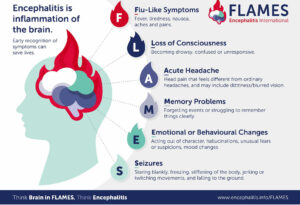
To bridge the gap between first symptoms and accurate diagnosis, Encephalitis International introduced FLAMES, a recognition tool that uses an acronym to highlight the condition’s urgent warning signs.
These include (F) flu-like symptoms, (L) loss of consciousness, (A) acute headache, (M) memory problems, (E) emotional and behavioral changes, and (S) seizures. These symptoms are applicable across both infectious and autoimmune encephalitis and signal the need for immediate medical attention.
The structured recall tool was launched ahead of World Encephalitis Day on Feb. 22 and can be used in both clinical settings and community awareness campaigns.
When encephalitis is recognized early, treatment can begin sooner and chances of recovery improve, Dr. Ferron F. Ocampo, specialist in adult neurology and neuroinfectious diseases said.
“Strengthening symptom awareness in communities and among frontline providers is essential,” Mr. Ocampo said.
In a low- to middle-income country like the Philippines, this strategy matters, as the disease burden is intensified by limited neurological services and restricted access to treatment and medicines, the organization said.
According to the World Health Organization, the Japanese Encephalitis (JE) virus, caused by mosquitoes, is the main culprit of viral encephalitis in many countries in Asia, including the Philippines.
JE cases in the country reached 1,532 in 2020 and 988 in 2021, with an incidence of around 0.7 per 100,000 children under 15 years, highest in the country’s northern region.
Since 2019, the Department of Health (DOH) has rolled out vaccinations for children aged nine months to under five in areas with high JE cases.
Encephalitis International is urging both the general public and non-specialist medical providers to use the FLAMES strategy.
Communities are also encouraged to learn and share awareness of the warning signs to reduce deaths and disabilities from encephalitis. — Edg Adrian A. Eva